
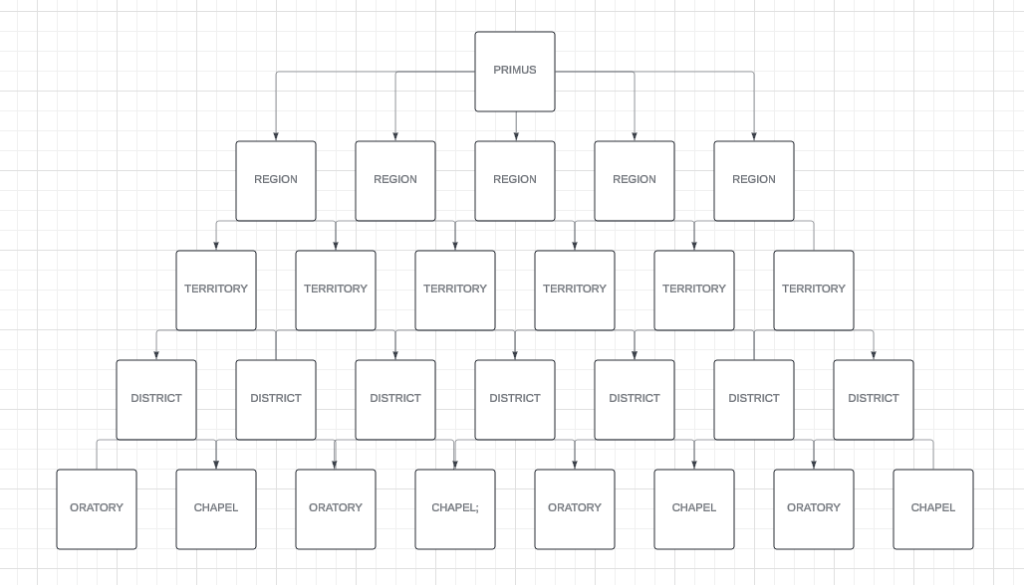
The Old Roman Apostolate is structured to ensure effective evangelization, education, and service, rooted in traditional Catholic values. Its organization allows for both centralized governance and local autonomy, facilitating a cohesive yet flexible approach to its mission. Below is an outline of the key components of its organizational structure:
Central Leadership
- Primus: The Primus, currently Archbishop Jerome Lloyd, is the highest authority within the apostolate, responsible for overall governance, strategic direction, and upholding the mission and values of the apostolate. He oversees sacramental administration, liturgical functions, doctrine, mission, and governance, and also provides spiritual and administrative leadership.
- General Council: The General Council assists the Primus in decision-making and governance. This council includes senior clergy and the territorial Episcopal Administrators who oversee various regions. They bring diverse perspectives and expertise, meeting regularly to discuss and make decisions on key issues, policies, and initiatives.
- Advisory Board: An Advisory Board composed of theologians, canon lawyers, and other experts provides counsel on doctrinal, legal, and strategic matters, ensuring that the apostolate remains faithful to Church teachings and operates within canonical norms.
Regional and Local Structure
- Regional Superiors: The apostolate is divided into regions, each overseen by a Regional Superior. Regional Superiors are responsible for implementing the apostolate’s mission within their respective areas, coordinating activities, and providing support to local communities.
- Territorial Episcopal Administrators: These administrators oversee the work and life of the clergy, missions, cells, and oratories within their territories. They are members of the General Council and play a crucial role in maintaining the apostolate’s cohesion and direction.
- Local Chapters: Local chapters form the grassroots level of the apostolate, allowing for direct engagement with communities. Each local chapter is led by a Chaplain who coordinates local activities, including liturgical services, catechesis, and charitable outreach.
- Missions: Within local chapters, individual parishes and missions serve as the primary points of contact for the faithful. These parishes and missions are led by pastors and mission directors who oversee daily operations and spiritual care.
- Cells: Small groups of the faithful attached to the apostolate either through a Mission or Local Chapter, who meet together regularly for worship, fellowship and study.
Clerical and Lay Roles
- Clergy: The apostolate includes priests, deacons, and seminarians dedicated to its mission. Clergy are responsible for celebrating the sacraments, preaching, teaching, and providing pastoral care, undergoing rigorous formation to ensure they are well-equipped for their roles.
- Religious Members: The apostolate includes members of religious communities who live out their vocations within its framework. A prominent religious community is the Congregation of the Divine Charity. This congregation is dedicated to living out the evangelical counsels of poverty, chastity, and obedience while engaging in ministries such as education, healthcare, and social services.
- Lay Members: Lay members play a crucial role in the apostolate, participating in various ministries and activities. They are involved in catechesis, charitable outreach, liturgical support, and administrative functions. Lay members often undergo formation programs to deepen their understanding of the faith and enhance their skills for service.
Departments and Ministries
- Evangelization and Catechesis Department: This department focuses on spreading the Gospel and educating the faithful through programs for religious education, RCIA, youth ministry, and adult formation.
- Liturgical Department: Ensures the reverent celebration of the Traditional Latin Mass and other sacraments, coordinating liturgical training, music programs, and the preparation of liturgical materials.
- Charitable Outreach Department: Organizes and manages the apostolate’s charitable activities, including food drives, medical clinics, educational support, and social services, addressing the physical and social needs of communities.
- Communications and Media Department: Manages the apostolate’s online presence, including the Old Roman TV YouTube channel, social media accounts, and website, producing content, managing public relations, and ensuring effective communication.
- Vocational Promotion Department: Dedicated to fostering vocations to the priesthood, religious life, and lay apostolate, organizing discernment retreats, vocational workshops, and providing resources for those exploring their vocations.
Financial Administration
- Finance Office: Oversees the financial operations of the apostolate, ensuring responsible stewardship of resources, handling budgeting, accounting, fundraising, and financial reporting.
- Development Office: Focused on fundraising and development, working to secure donations and grants to support the apostolate’s activities, engaging with benefactors, and organizing fundraising campaigns.
Governance and Accountability
- Canonical Compliance: Ensures that all activities comply with Canon Law and Church regulations, maintaining close relationships with diocesan authorities and seeking ecclesiastical approval for its initiatives.
- Internal Audits and Reviews: Conducts regular audits and reviews to ensure transparency, accountability, and effectiveness in all operations, including financial audits, program evaluations, and pastoral activities.
The Old Roman Apostolate is dedicated to preserving and promoting the traditional teachings and practices of the Catholic Church, ensuring that its work of evangelization, liturgy, and charity continues to flourish through its well-structured organization.

 APOSTOLATUS VETUS ROMANUS